Hardwood flooring is not just about appearance — it’s about engineering. Every plank installed in your home is part of a carefully balanced system designed to accommodate natural wood movement while maintaining beauty and structural stability.
For homeowners in climates like Chicago and nearby areas such as Orland Park, seasonal humidity swings are part of everyday life. A precision installation doesn’t fight those environmental changes — it anticipates them.
When installation is done correctly, hardwood floors expand and contract subtly without creating stress. When shortcuts are taken, that same natural movement can lead to visible problems.
This guide explains what precision installation means, why movement allowances are essential, and how professional craftsmanship protects your investment.
Hardwood Floors Are Built to Move — Not Stay Rigid
Many homeowners assume flooring should remain perfectly static year-round. In reality, wood is constantly adjusting to its environment.
As humidity rises, boards absorb moisture and expand. When indoor air dries, boards release moisture and contract. This cycle repeats seasonally — especially in Midwest homes.
Precision installation doesn’t attempt to eliminate movement. Instead, it:
Provides room for expansion
Secures boards correctly
Maintains structural flexibility
This balance allows flooring to behave naturally without damaging itself or surrounding structures.
Expansion Gaps: The Invisible Safety Zone
One of the most important — yet invisible — elements of hardwood installation is the expansion gap.
Installers leave a carefully measured space between the flooring and perimeter walls. This space allows boards to expand during humid conditions without pushing against rigid surfaces.
Without this allowance:
Pressure builds
Boards lift or buckle
Structural stress develops
Expansion gaps are later hidden by baseboards or trim, preserving aesthetics while protecting the floor.
Think of expansion space as shock absorption for your hardwood system.
Fastening Precision: Stability Without Restriction
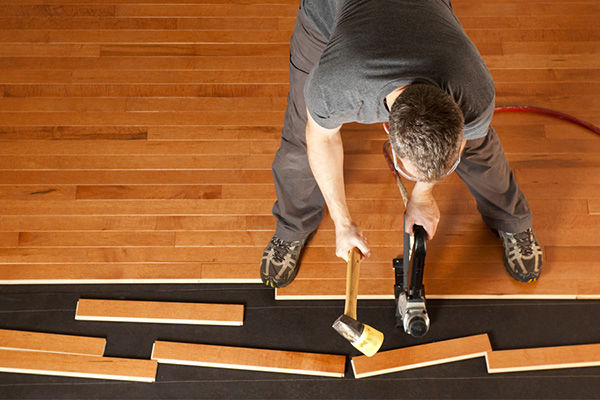
Proper fastening secures flooring while still allowing controlled movement.
Professional installers follow strict fastening patterns based on:
Board width
Wood species
Installation method
Subfloor type
Wider planks require closer fastening intervals to prevent excessive flexing. In some cases, boards are both nailed and supplemented with screws for added stability.
Improper fastening — too loose or too tight — disrupts movement balance and increases the risk of cupping or separation.
Precision fastening ensures boards stay flat while remaining free to respond naturally to environmental changes.
Wide Plank Flooring: Beauty with Responsibility
Wide plank floors are popular for their modern, elegant look. However, their increased surface area makes movement more noticeable.
Precision installation becomes even more critical:
Enhanced moisture matching
Accurate fastening schedules
Strict acclimation standards
When wide planks are installed without proper allowances, stress accumulates quickly. Professional technique ensures visual appeal never compromises performance.
Directional Installation Matters
Wood expands more across its width than its length. Installers account for this when choosing plank orientation.
Flooring direction is influenced by:
Subfloor structure
Room layout
Movement control
Proper orientation distributes expansion forces evenly, reducing stress points and improving long-term stability.
Subfloor Integration: A Unified System
Hardwood flooring is only as stable as the surface beneath it. Precision installation ensures a seamless connection between floor and subfloor.
This includes:
Leveling irregularities
Verifying structural soundness
Addressing squeaks or flex
A stable subfloor prevents uneven stress that could magnify natural movement.
Professional installers treat flooring and subfloor as one integrated system.
Managing Movement at Transitions
Doorways, large open spaces, and transitions between materials require special attention.
Installers may incorporate:
Transition moldings
Movement breaks
Expansion joints
These features absorb seasonal movement and prevent pressure from transferring across long spans of flooring.
In larger homes, movement management becomes essential to preserving flatness and alignment.
The Risk of Rushed Installation
Many flooring failures occur when installation is rushed or environmental conditions are ignored.
Common shortcuts include:
Skipping acclimation
Installing before climate stabilization
Ignoring fastening guidelines
These mistakes prevent flooring from adjusting naturally, resulting in:
Cupping
Gapping
Buckling
Professional installers understand that time spent preparing and installing correctly saves homeowners from costly repairs later.
Seasonal Movement: What Homeowners Should Expect
Even a perfectly installed hardwood floor will respond to seasonal humidity.
Winter months may reveal small gaps as air dries. Summer humidity may cause boards to settle tightly together. These shifts are normal and temporary.
Precision installation ensures movement remains subtle and controlled — not destructive.
Maintaining indoor humidity between roughly 35%–55% helps minimize seasonal variation.
Craftsmanship Makes the Difference
Hardwood flooring installation is a skilled trade combining science, experience, and craftsmanship.
Professional installers:
Measure moisture precisely
Allow proper expansion space
Follow fastening best practices
Integrate flooring with the structure
Anticipate seasonal movement
These practices transform natural wood behavior into predictable performance.
The result is a floor that feels solid, looks beautiful, and adapts gracefully to environmental change.
Why Precision Protects Your Investment
Hardwood floors are designed to last decades — but only when installed with movement in mind.
Precision installation:
Prevents structural stress
Reduces cosmetic issues
Preserves board integrity
Supports long-term performance
Ignoring movement allowances compromises the entire system.
When craftsmanship meets environmental understanding, hardwood flooring becomes one of the most durable finishes in your home.
Work with Professionals Who Install for the Long Term
Choosing an installer isn’t just about appearance — it’s about long-term performance.
The team at Top Hardwood Flooring specializes in precision hardwood installation for Chicago-area homes. Every project is approached with moisture awareness, movement planning, and craftsmanship designed for Midwest conditions.
If you want hardwood flooring that stays beautiful through every season, expert installation is the key. Contact Top Hardwood Flooring to schedule a consultation and start your project with confidence.